“Storytelling for Understanding”: A Reflection on My Service-Learning Journey
Chen Ho Kwan
A Unique Service-Learning Experience
Throughout this service-learning subject, I explored my thoughts and I practiced my storytelling skills. I think creating stories is fun. I want to become a master storyteller like Steve Jobs.
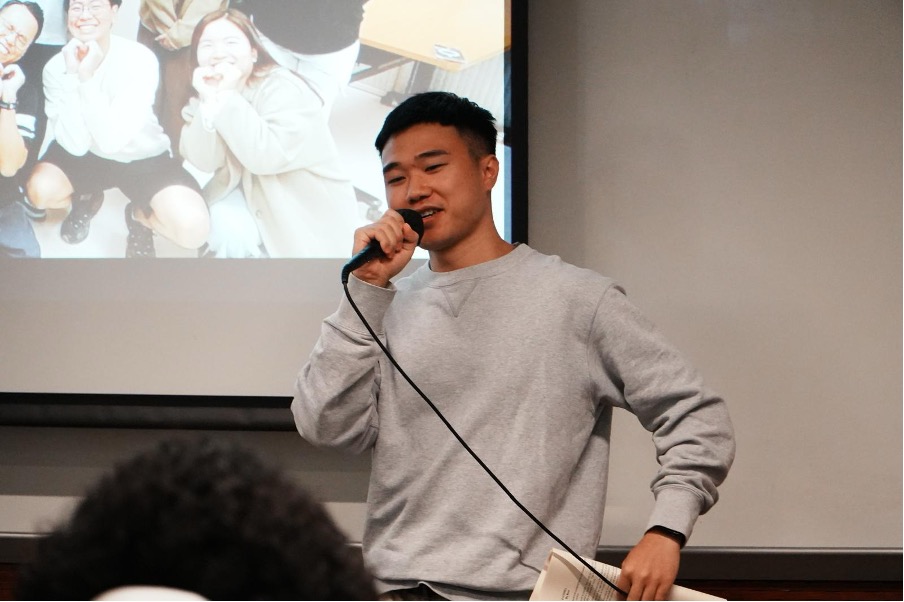
At the ceremony in Week 13, I shared my story publicly. I felt that I went from being a teenage boy to a man: I could read fluently with an appropriate volume, and I was satisfied with my overall performance. This was the result of the lecturers’ guidance and the practice I had with my classmates.
Week 5 Refugee Walk
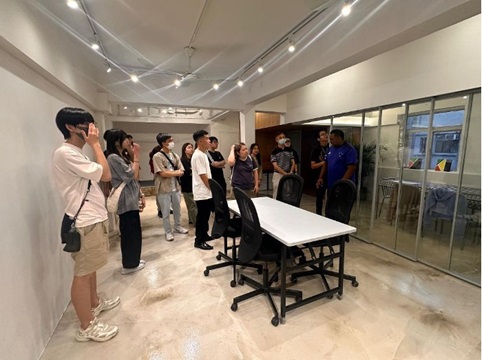
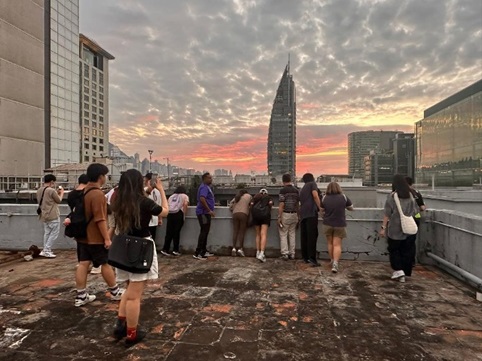
At the beginning, I didn’t have much understanding of refugees. I thought seeking refuge would only happen in Hong Kong in the 1970s and 1980s. In this subject, I learned that most of my service recipients were South Asian, Southeast Asian and African. Through human libraries, they shared some of their stories with us. This helped me to think about how to interact with refugee children. From Week 7 to Week 13, I communicated and played games with children every Saturday. I thought they were energetic and intelligent.
Our workshops focused on exploring our stories. All humans need stories, especially since we live in cities. School and work can make us ignore who we are. If we only focus on work, we will completely lose ourselves. This is one of the factors that contributes to mental health problems. Therefore, we need to consciously pay attention to the stories we tell ourselves. We as students can impart some positive energy to children so that they can maintain a positive attitude to face problems. In this regard, the workshops we delivered were successful practices.
The refugee children, like Sarah and Sandy, looked shy at the beginning. They often chatted privately. Other children were also like this. In Week 7, we would sit next to the children without saying anything. By Week 13, we (PolyU SPEED students) and the refugee children became more like friends. We shared interesting and deep personal stories.
To be honest, I encountered many difficulties. I had little experience in talking to non-Chinese speakers in real life. I also didn't often interact with people younger than me. But the biggest obstacle was my lack of English vocabulary. This often created barriers to my expressions.
In order to tackle these problems, I tried to use English more often in my life. I hoped that I could become familiar with using English through practice. Second, I watched the English TV series Modern Family every day. I would also use English more often on campus. My English improved a lot through intensive practice. Then I also learnt to use body language to express my message. Later, in my interactions with children, most of the time I knew what they were talking about. Of course, it was helpful when the children would use some Chinese expressions. These experiences made me a better communicator. In the end, I found it interesting to have the mind of an engineer, combined with that of an artist.
Note: Fictitious names are used to protect service recipients’ privacy.
Writer's Bio: