


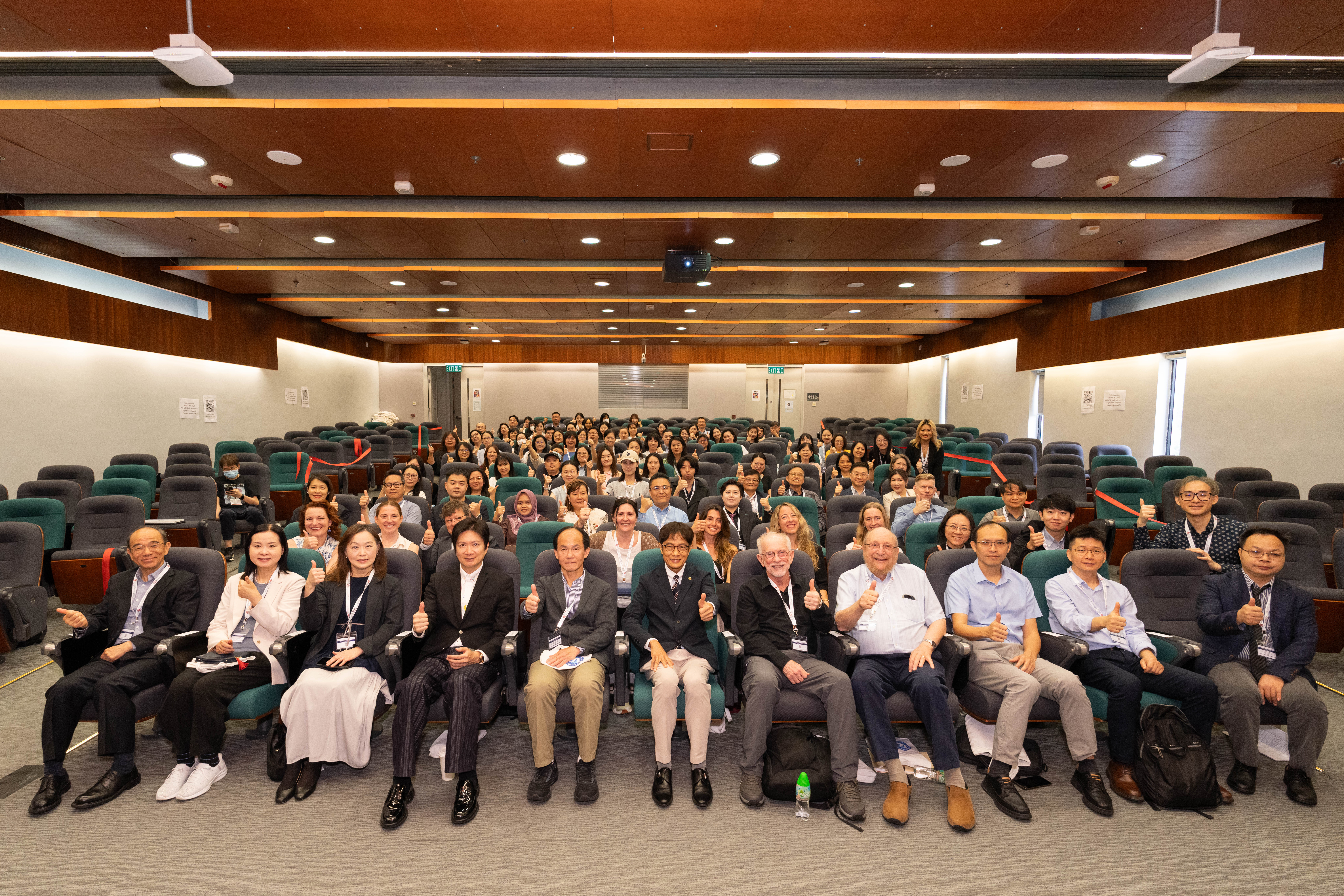
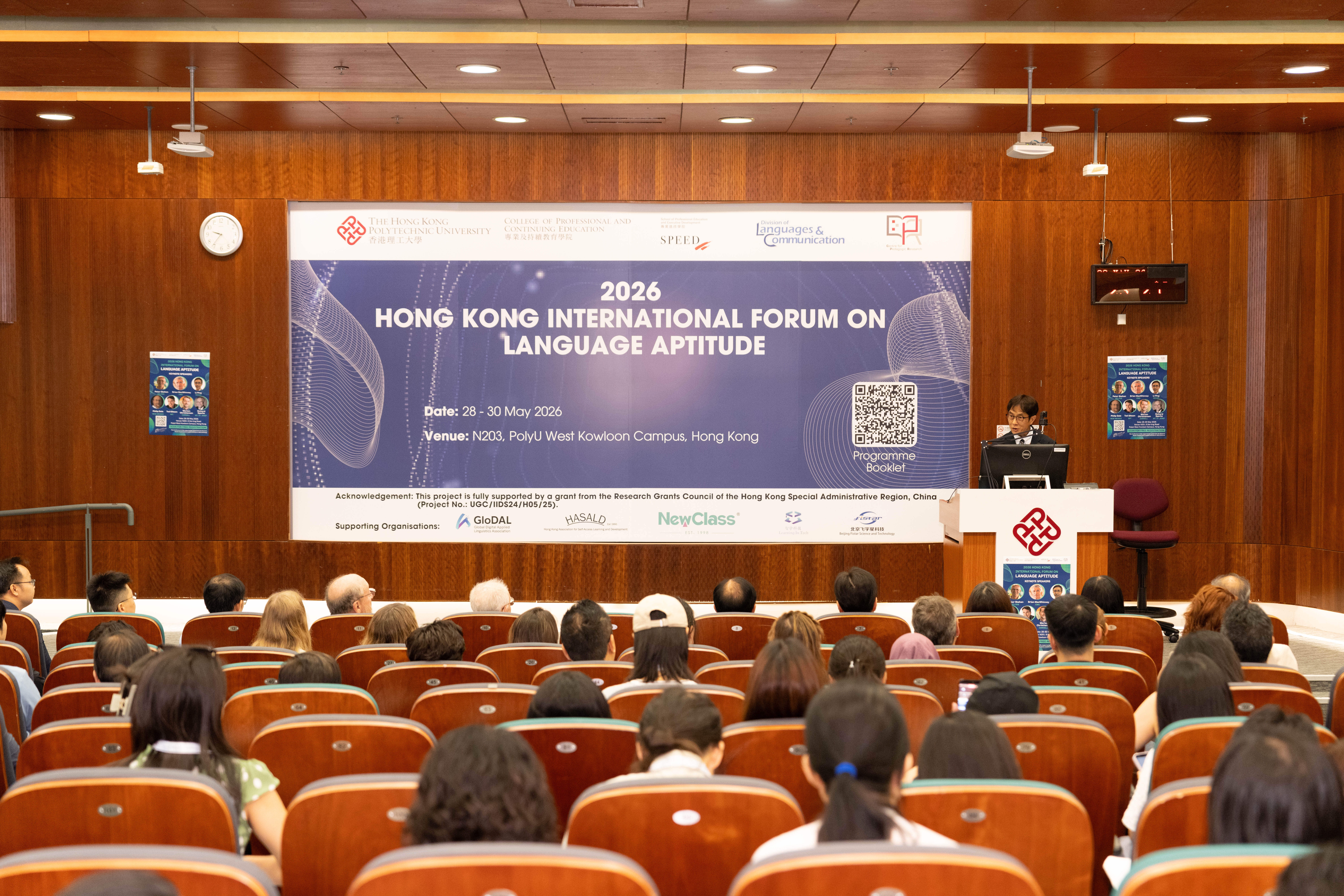
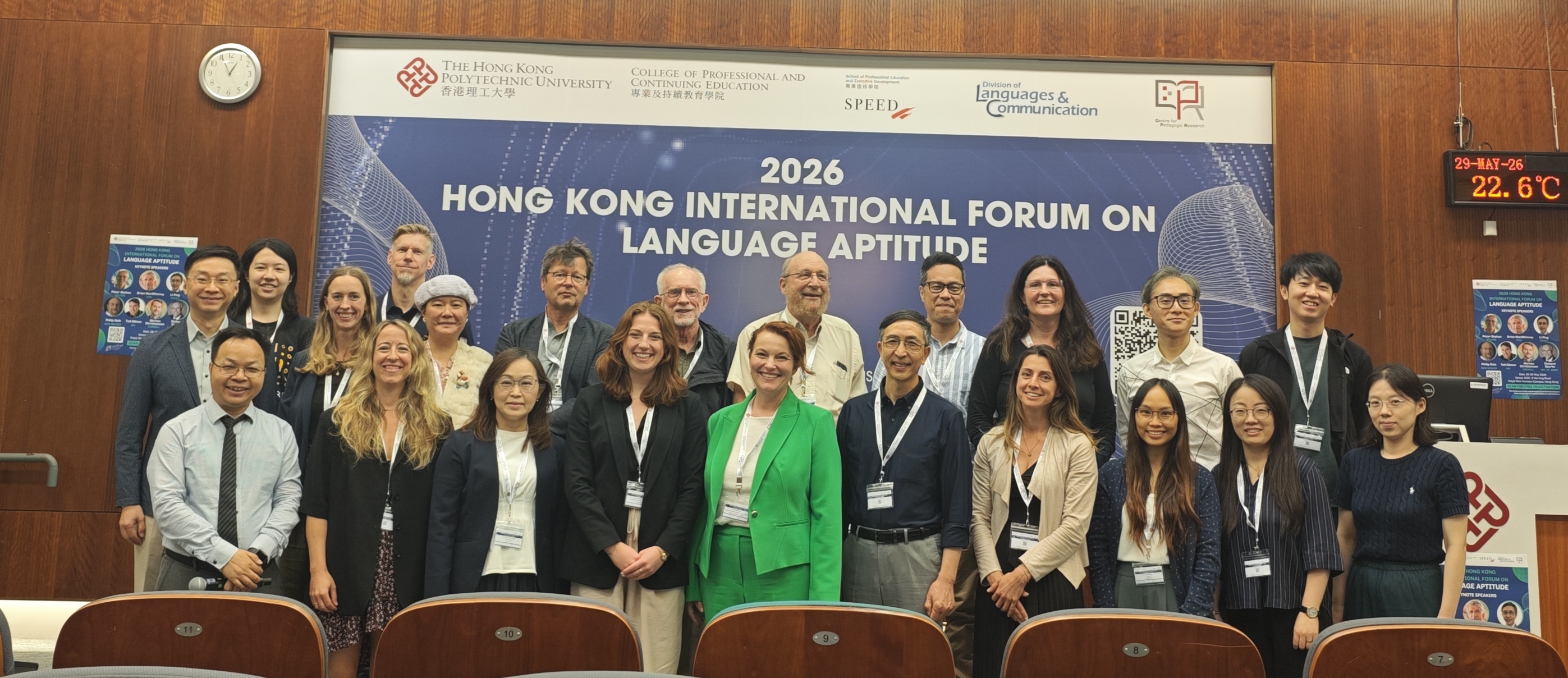
The 2026 Hong Kong International Forum on Language Aptitude, hosted by PolyU CPCE from 28 to 30 May 2026, welcomed nearly 200 participants from 25 countries to explore the intersections of language aptitude, cognitive science, neuroscience and AI.
The event opened with welcoming remarks by Prof. Peter Yuen, Dean of PolyU CPCE, and Dr Esther Tong, Head of the Division of Languages and Communication. Their addresses was followed by a workshop led by Associate Division Head Dr Edward Wen, who introduced the Distributed Aptitude Framework and three perspectives on AI in language learning: AI as Tool, AI as Factor, and AI as Prosthesis.
Across three days, distinguished keynote speakers—including Prof. Brian MacWhinney, Prof. Ping Li, Prof. Morten Christiansen, Prof. Peter Skehan, Prof. Philip Dale, Prof. Richard Sparks, and Prof. Ted Gibson— delivered inspiring presentations that set the tone for the discussions.
Plenary sessions covered a wide range of topics. Prof. Mark Feng Teng spoke about working memory and vocabulary acquisition, while Prof. Yuichi Suzuki discussed explicit and implicit aptitude. Prof. Raphael Berthele showcased multi-variable approaches using graph analysis and machine learning, and Dr Sabrina Turker explored the neurobiology of language and reading. Other fresh perspectives included: Ms Jessica Blake-West introduced the Coding as Another Language (CAL) framework; Prof. Richard Sparks presented longitudinal evidence that first-language achievement is the strongest predictor of second-language aptitude; Prof. Chantel Prat examined programming language aptitude; and Prof. Zhenguang Cai demonstrated AI-powered psycholinguistic tools. A roundtable brought together researchers, educators, and EdTech industry leaders to discuss how AI can drive innovation in language education.
Supported by Research Grants Council’s Inter-Institutional Development Scheme, the Forum not only showcased cutting-edge research but also highlighted the importance of global collaboration in advancing the study of language aptitude.
 |
 |
 |
 |