


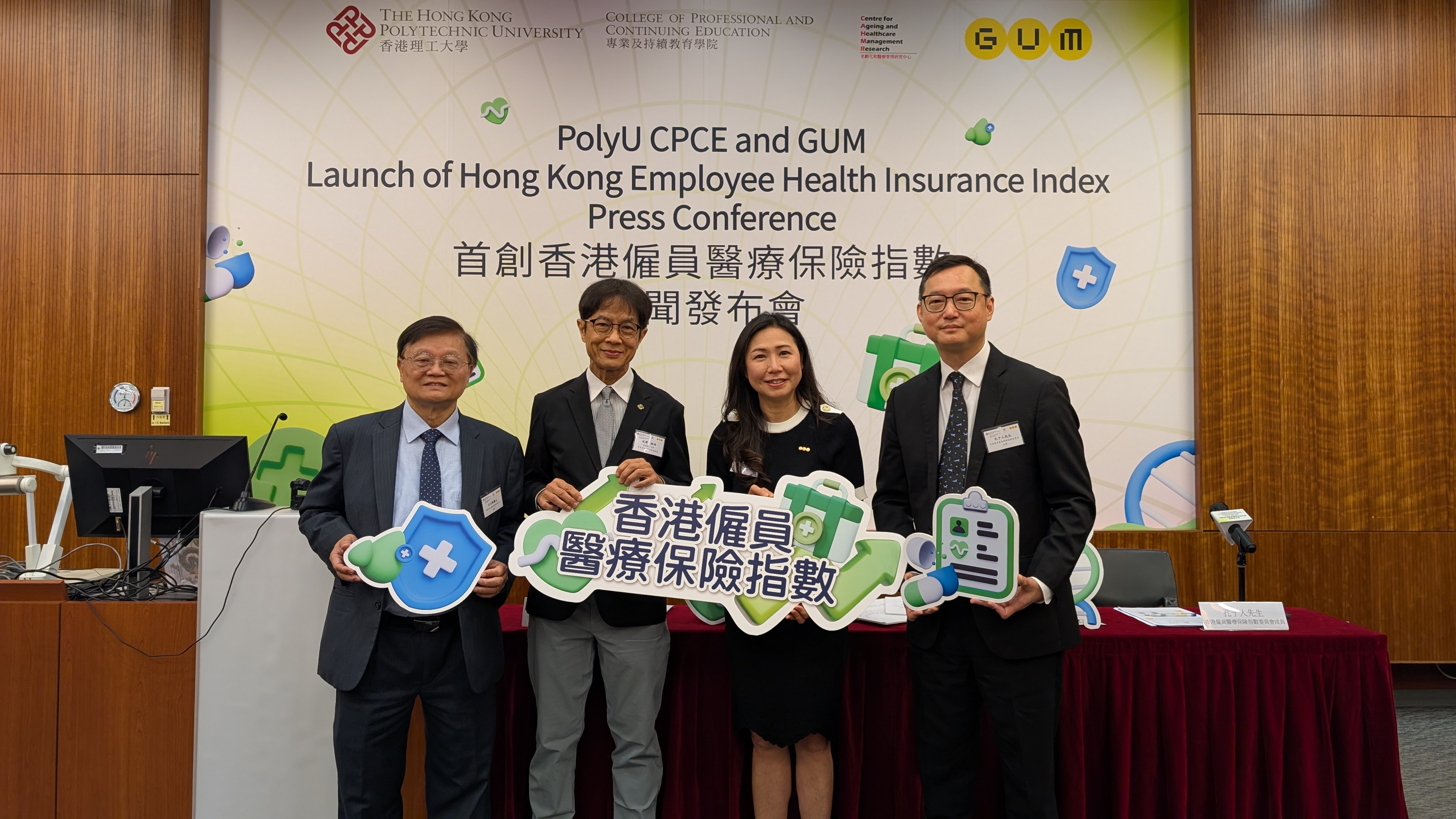
PolyU CPCE, in collaboration with corporate staff benefit and MPF consultant GUM, launches Hong Kong’s first "Employee Health Insurance Index". Covering 19 years of data, the Index provides a comprehensive illustration of the actual utilisation, expense and premium trends of group medical insurance in Hong Kong. It reveals that despite stabilisation in medical expenses, the sharp increase in utilisation has led to a cumulative 55% surge in staff medical insurance expenses over the past three years.
By quarterly updating the index, PolyU CPCE and GUM aim to enhance different parties' awareness of medical insurance utilisation. In the long run, they aim to foster the smarter utilisation of insurance as well as to improve the sustainability of the private healthcare system and reduce the burden on the public healthcare system, so as to create a win-win situation for various stakeholders, ultimately helping to achieve the social goal of "Health for All". In the long run, the initiative seeks to break the cycle of rising claims driving up medical costs and premiums.
The Hong Kong Employee Health Insurance Index is composed of the Utilisation Index, the Expense Index and the Premium Index, covering data from Hong Kong’s group medical insurance market from 2006 to 2024. Based on in-depth research and optimisation, the Index is developed with three core findings derived from the analysis, which provide insight into the real conditions of the group medical insurance market.
The two parties jointly organised a press conference on the Employee Health Insurance Index on 16 May 2025 to shed light on the findings. Attendees included Prof. Peter Yuen, Dean of PolyU CPCE; Dr Gloria Siu, Chief Executive of GUM; Mr Lawrence Hung, a member of the Hong Kong Employee Health Insurance Index Committee; and Dr Ben Fong, Director of the Centre for Ageing and Healthcare Management Research (CAHMR) of PolyU CPCE.
1. Surge in Utilisation
The Utilisation Index consists of the Hospital Benefit Utilisation Index and the Outpatient Utilisation Index. Since the resumption of normalcy after COVID outbreak, the Outpatient Utilisation Index has surged significantly, recording a cumulative increase of 102% over the past two years. Last year alone, cases of acute upper respiratory infections and common colds rose 25% year on year. The doubling of the Outpatient Utilisation Index over the past two years highlights the sharp increase in staff demand for outpatient services compared with the pre-pandemic period. Additionally, hospitalisation rates have not returned to pre-pandemic levels.
Dr Ben Fong, Director of CAHMR, believes that the Index reflects that attention should be paid to employees' health conditions. He states, "After the pandemic, the public’s immune memory for common colds has diminished, leading to a sharp increase in upper respiratory infections following the lifting of the mask mandate. This has significantly boosted employee demand for outpatient services to higher levels before the outbreak of the pandemic”.
2. Average Medical Costs Stabilising
Medical inflation remains a key concern. The Expense Index, which reflects outpatient and hospitalisation expenses, remain high but is showing signs of stabilisation. Last year, the Index declined by 6% year on year to 202, the first drop in four years, with average hospitalisation expense per surgery falling to HK$21,851. Meanwhile, the Outpatient Expense Index has decreased for two consecutive years, dropping 8% last year to 284, with average outpatient expense falling to HK$533 per visit. These trends suggest both hospitalisation and outpatient expenses appear to have dropped.
Dr Gloria Siu, Chief Executive of GUM, comments: "Hong Kong's projected medical inflation for 2025 stands at 9%, which, compared to double-digit increases in other parts of Asia, is relatively moderate. While medical expenses have been gradually stabilising, they remain at high levels. The primary factors behind the decline in average medical expenses include the growing prevalence of same-day surgical procedures for virus wart treatment and gastrointestinal endoscopy, which have lowered overall hospitalisation expenses. At the same time, a surge in upper respiratory infections has driven up the utilisation of general outpatient services, leading to a reduction in average outpatient expense. However, as medical costs continue to rise, we anticipate that expenses will return to an upward trend in the future!"
3. Continued Rise in Premiums
The Premium Index has increased for three consecutive years, showing an upward trend since 2022. By 2024, the Composite Premium Index had surged by an accumulated 55% over the previous three years, with hospital benefit premiums rising more sharply than outpatient premiums, primarily due to increased utilisation of medical services.
Prof. Peter Yuen, Dean of PolyU CPCE and an expert in health economics, explains: "The rise in medical premiums is mainly driven by high utilisation rates. Insurers set future premium rates based on past claim experiences. Group medical insurance is facing a dilemma where high utilisation leads to premium increases, which, in the long run, could undermine the sustainability of private healthcare and indirectly intensify the pressure on the public healthcare system”.
Choosing the Suitable Insurance for Employees and Controlling Potential Premium Increases
Mr Lawrence Hung, a member of Hong Kong Employee Health Insurance Index Committee, cautions: "The sharp rises in group medical premiums have placed significant financial burdens on many employers, an issue which cannot be ignored. According to the research report of the Index, employers can mitigate potential premium increases by selecting medical insurance plans better align with employees' needs, healthcare education and targeted preventive measures. This approach can not only enhance employee well-being but also improve corporates' cost efficiency, potentially breaking the cycle of rising claims driving up premiums and business expenses”.
Quarterly Updates of Index for Achieving Win-win among Multiple Stakeholders
Dr Gloria Siu, Chief Executive of GUM, reveals that PolyU CPCE and GUM will continue to refine and update the Index to provide valuable insights for various stakeholders and promote the sustainable development of the medical insurance system. "The Index will be updated quarterly, serving as a crucial reference for policymakers in the government, businesses and staff benefit sector. Our goal is to support the realisation of the 'Health for All' initiative, fostering long-term collaboration and mutual benefits among employers, employees, insurers and the government”.
 |
 |
 |
 |

